Why you need a website (yes, you)
Creating your own cosy home on the web.

This post is a version of conversations I’m increasingly having. If you are on Instagram* in any way professionally – whether that’s through brand collaborations, as a way of reaching people who might want your products or services or simply as a place to showcase and share your work – I’d love to invite you to consider stopping. Okay, maybe not stopping altogether, but perhaps rethinking how and why you share there, and to consider building something that only you own.
As someone who recently collated their many online selves into one spot, it left me all too aware of what a walled garden Instagram is, and how dangerous that can be, if you use it professionally in any way.
So, if you regularly:
- Save Instagram highlights to collate useful, informative or inspiring content
- Share reels with recipes, travel tips, round ups
- Share thoughts, insights, snippets from your professional life
- Make money from the content your create
You should seriously consider creating your very own home on the web.
Why?
- Because the merciless algorithm that controls the flow of eyeballs to your posts, reels and stories can change at any minute, and could stem that flow to a trickle, leaving you with no way of reaching the people who want to hear from you.
- Because Instagram doesn’t make it easy to export all the content you have created and import it into something else. For example, it took me less than ten minutes to import 15+ years of blog posts from Wordpress to Ghost – links, images, tags, everything. It's been so lovely to easily dip back into old posts, and I'm glad I have them. Not to be a total downer, but if you were hacked or mistakenly locked out of your Instagram tomorrow – which has happened to so many people – Instagram wouldn't owe you getting your content back.
- Because not having all your eggs in one basket also makes it easier to dip a toe in other platforms when and if it takes your fancy. More than anything, platforms like Instagram want to keep you there; to paraphrase this (excellent) post on why Spotify is failing: Instagram does not want you to have a relationship with your followers. Instagram wants your followers to have a relationship with Instagram.
Their house, their rules
While I have loved Instagram as a place to follow inspiring creators and friends (and will keep doing that), if you are using it for work, you are effectively working for Instagram, for free. It wouldn’t be able to generate billions of ad revenue (some of it decidedly dodgy) if you weren’t uploading your content. In exchange for your free content, Instagram may or may not direct eyeballs your way. But only if you keep creating content, more frequently their (very specific) way, on their terms.
That may seem obvious, until you realise that if you have a website, blog, newsletter or CMS (content management system) it is just that – yours. It exists simply to store and showcase you and your work. The business model matters.
So what do I do instead?
The good news is you don't have to ditch the 'gram altogether. But a few simple mindset and workflow shifts could ultimately save you from seeing thousands of hours of work going down the drain when the platform inevitable dies or morphs into something unrecognisable and we all move on to something else.
Create your POSSE
The POSSE content publishing model has been around a while, and it stands for Publish (on your) Own Site, Syndicate Elsewhere. It simply means that you publish the content on your own site first, then share it across socials and platforms.
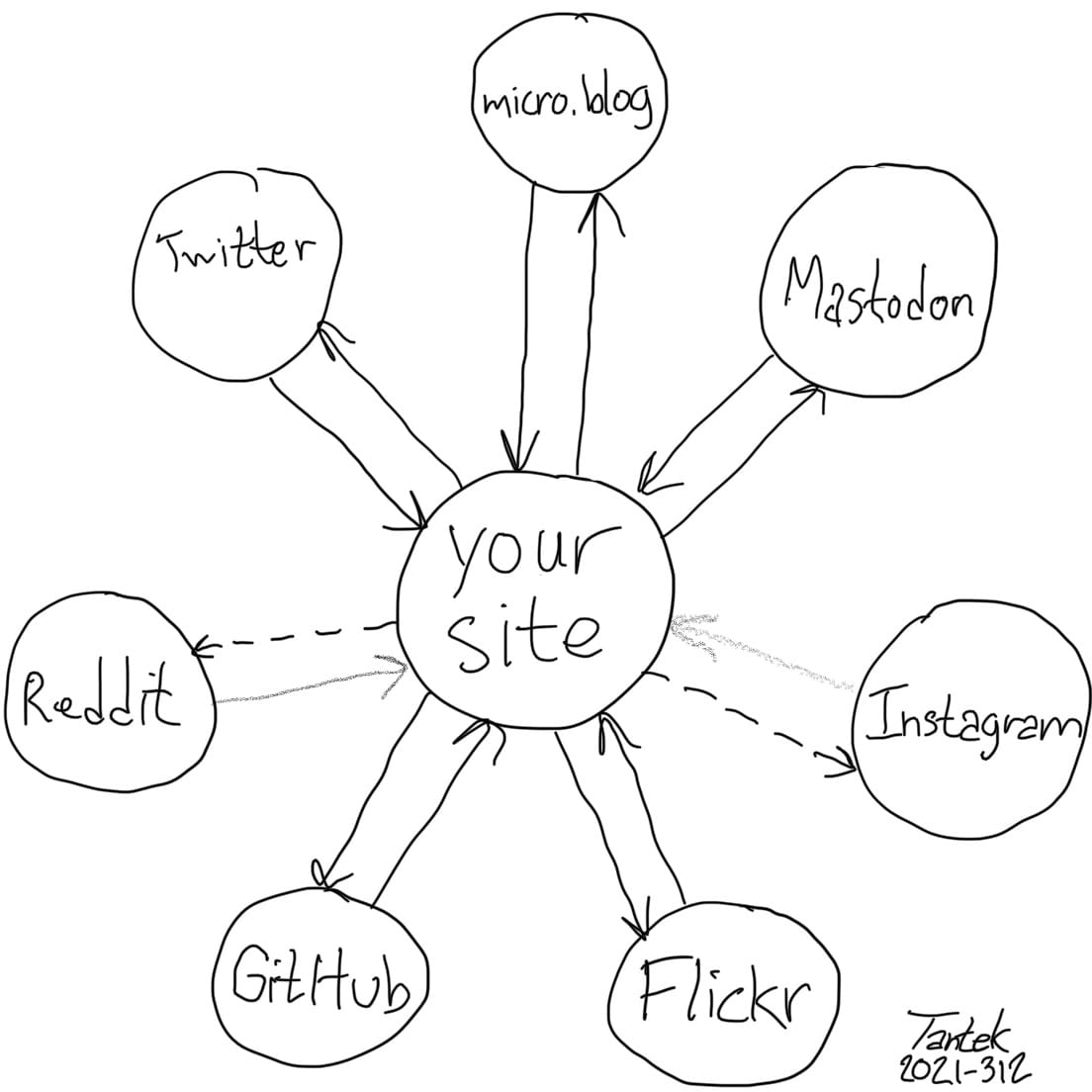
This allows your friends and followers to read your content in their way, while also always sharing original post links to provide them a path to directly interacting with your content.
This approach breaks you out of the silo, while letting you still play there if you want; as they explain it: “By posting first on your own site, you create a direct ownership chain that can be traced back to you”. So you can still make that cute recipe reel or travel guide, just make sure to also host the full recipe on your own site first (bonus, this makes it easier for people, search engines and yes, even GPTs to find it).
Ideally, you would have some kind of newsletter here too. Why? People might leave social media networks (case in point: Twitter), but they'll likely keep their email, so this way you can still stay in touch, even if you are no longer inhabiting the same social media space.

So, while I’m in not necessarily encouraging you to ditch the ‘gram altogether, especially if that’s where your audience is, I would love to gently nudge you towards starting to build you own home on the web alongside it. Here are a few very quick and dirty tips on how to do that. (Goes without saying, I have not been paid to share these and pay for all of these services myself, in full.)
If you want a simple, one-page website…
…then Carrd is a great option. I’ve been using it for years; $19 gets you a whole year of being able to create up to ten simple, beautiful and responsive websites. You can easily hook them up to your own domain too. Great for landing pages, an “about me” page, one-off projects, or family events etc. You can even embed booking forms and newsletter sign-ups if needed.
If you want to publish guides, recipes and/or newsletters on the reg…
… then I can’t recommend Ghost enough. I’m now using it both personally and professionally and it’s a simple and fantastic way to both post online and send out newsletters. They have lots of free and paid templates, and getting up and running is relatively straightforward. Bonus, also works if you plan on monetising Substack/Patreon style.
(A note on Substack: I really enjoy Substack and, for now, still have my Motherhood Sessions newsletter there. However, I do think it's probably safest to think of it as another social network – you are subject to their terms of service, dependent on their platform and there is no SEO value being transferred to your own domain from any of the content you create there.)
My content creating tech stack
After plenty of tinkering and one too many late nights, I have a fairly lean and straightforward set up right now:
- My main website and portfolio is self-hosted instance of Jekyll, a static site generator running this lightly tweaked theme. Ben did most of the heavy lifting on this, I mainly picked fonts and got excited about animated annotations. Still very much a work in progress, but am saving myself $17 per month compared to when I was using a dedicated portfolio website.
- My blog and newsletter now both run through Ghost
I hope this was helpful in some way. And if you chose to give it a go, shoot me a link when you're live!
*I'm saying Instgram in this post, but it could easily be Facebook, LinkedIn, TikTok, etc.